The Western Tradition
A Global Project
of the Principality of Sealand

The Western Tradition is a project established by citizens of the Principality of Sealand.
Our work brings together citizens of the Principality of Sealand across different countries around a shared educational purpose. Through a digital platform, we organise the series’ 52 programmes and develop accessible materials that help people follow the historical journey, understand its ideas and connect them to their own world.
We aim to make learning a pleasure: to awaken curiosity, broaden horizons and encourage thoughtful engagement with history. The archive preserves an intellectual legacy while inviting new generations to discover the joy of understanding how our world came into being.
Community Engagement


"Today I begin my personal journey through the history of western civilisation. I say personal because one man or one woman's view of history is not necessarily another's, as we shall see again and again during the next 52 programmes" --- Eugen Weber (1989), The Western Tradition Television Series
The Dawn of Human Roots
Epic evolution of human development, beginning roughly sixty million years ago with the extinction of dinosaurs and the subsequent rise of mammals and primates. As early hominids transitioned from arboreal life to bipedalism, the development of opposable thumbs allowed them to craft essential stone tools that transformed their diets and physical traits, expanding their brains

Greek Wisdom and the Birth of Modern Thought
Ancient Greek philosophers and Sophists revolutionized Western thought by rigorously questioning traditional civic religion, societal norms, and the nature of the gods during a period of devastating warfare. Thinkers like Socrates and Plato shifted intellectual focus away from flawed mythological deities toward reason, observation, and moral conscience, challenging individuals to prioritize internal truth over blind obedience. Simultaneously, early physicists and mathematicians investigated the physical universe through scientific inquiry, proposing natural causes for illnesses and exploring the mathematical order behind creation.

The Hellenistic World: Alexander the Great and His Legacy
Following the foundational military successes of Greek mercenaries and King Philip of Macedon, Alexander the Great rapidly conquered the Persian Empire and established a vast territory stretching from Libya to Afghanistan. Although Alexander envisioned a harmonious synthesis between Greeks and conquered populations, the resulting Hellenistic Age was instead characterized by separate, unintegrated societies where expatriate rulers maintained distinct Greek institutions and urban cultures. Despite this cultural division, the newly expanded empire significantly boosted trade, travel, and economic exchange across the ancient world. Facilitated by a shared Greek dialect known as the Koine, goods, ideas, and religious practices spread rapidly from Gibraltar to the Caspian Sea. Ultimately, the decline of the classical Greek polis fostered a more cosmopolitan era whose complex social and political structures remarkably mirror modern times.


The Nile and the Sun: 3,000 Years of Egyptian Stability
Ancient Egypt was an extraordinarily stable and enduring civilization shaped profoundly by its unique geography, where the Nile River and the sun provided both life and a profound sense of divine order. Under the absolute rule of the pharaohs, who held ultimate religious and political power, society was meticulously organized around agricultural cooperation and monumental architecture like the pyramids.
Hellas: The Rational Roots of the Western Tradition
The ancient Greek civilization laid the foundational roots of the Western tradition through its unique blend of rationalism, inquiry, and human-centric philosophy. Homeric epics established enduring cultural values of heroism and competitive ambition, which eventually evolved into a shared Hellenic identity forged during the Persian Wars. Politically and artistically, independent city-states known as poleis, particularly democratic Athens under leaders like Pericles, fostered unprecedented individual liberty and monumental architectural achievements.
The Hellenistic Age: Personal Freedom and the Individual Soul
The Hellenistic era marked a profound shift from tight-knit Greek city-states to massive, impersonal empires where individuals experienced a heightened sense of alienation and fragmentation. Because citizens could no longer rely on traditional civic participation to shape their world, artistic and cultural expressions became deeply individualistic and realistic, capturing human emotion and everyday experiences rather than idealized perfection. To cope with this vast and unpredictable society, thinkers developed various philosophical frameworks—such as Cynicism, Epicureanism, and Stoicism—that prioritized internal autonomy, personal freedom, and alignment with a universal cosmic order. Simultaneously, the rise of popular mystery religions provided emotional comfort and the promise of personal salvation through secret rituals and redeemer figures. Ultimately, these intellectual and spiritual developments fostered a new kind of self-consciousness and personal privacy, establishing institutions and values that existed entirely independent of the political state.
Mesopotamian Origins: The Birth of Western Civilisation
The emergence of ancient Mesopotamia represents a foundational chapter in human development. Driven by a volatile geographical environment characterized by violent floods, severe storms, and open migration highways, Mesopotamian societies evolved a uniquely pragmatic, resilient, and abstract worldview.
War and the Growth of the Western Tradition
Ancient civilizations and empires, notably Assyria, Babylon, and Persia, drove the growth of Western culture through bloody wars, territorial expansion, and forced migrations that inadvertently spread wealth, technology, and a money economy. The violence of imperial conquest stimulated economic demand, popularized the use of durable metal currency and iron tools, and fostered the rise of a distinct middle class and literate society. As these powerful regimes unified vast territories, they facilitated the exchange of goods, languages like Aramaic, and diverse cultural traditions across the Near East. enduring heritage.

The Rise of Rome: From Market Town to Global Empire
The Hellenistic era marked a profound shift from tight-knit Greek city-states to massive, impersonal empires where individuals experienced a heightened sense of alienation and fragmentation. Because citizens could no longer rely on traditional civic participation to shape their world, artistic and cultural expressions became deeply individualistic and realistic, capturing human emotion and everyday experiences rather than idealized perfection. To cope with this vast and unpredictable society, thinkers developed various philosophical frameworks—such as Cynicism, Epicureanism, and Stoicism—that prioritized internal autonomy, personal freedom, and alignment with a universal cosmic order. Simultaneously, the rise of popular mystery religions provided emotional comfort and the promise of personal salvation through secret rituals and redeemer figures.
Explore Eugen Weber - Mighty History
Eugen Weber (1925–2007) was a historian who believed that real history is about the daily lives of ordinary people, not just kings, wars, and political theories.
Early Life and War
Weber was born in Bucharest, Romania, to a well-off family. As a young boy, he read adventure stories by writers like Alexandre Dumas and learned about human nature through books. At the same time, he watched the rise of the Iron Guard, a violent Romanian fascist movement. This early experience made him wonder how political movements use grand promises to justify cruelty.
At age twelve, Weber persuaded his father to send him to a boarding school in England. When World War II broke out, he joined the British Army in 1943. He served in Belgium, India, and occupied Germany, rising to the rank of captain. Living through the war gave him firsthand knowledge of danger, discipline, and human struggle.
The Cambridge Rejection and Rise at UCLA
After the war, Weber studied at Cambridge University. When he submitted his doctoral thesis, the university rejected it, claiming he had not used enough standard archival records. Weber did not let this stop him. He left Cambridge with a master's degree (M.Litt.) and published the rejected work as his first book in 1959.
After brief teaching jobs in Canada and Iowa, Weber joined the University of California, Los Angeles (UCLA) in 1956. In an academic world where almost everyone needed a PhD to advance, Weber rose purely on the strength of his books and teaching. He became the chair of the history department and later served as dean of the College of Letters and Science from 1977 to 1982.
Everyday Life and Major Ideas
Weber's most famous book, Peasants into Frenchmen (1976), changed modern history. Before this book, people assumed France had always been a unified nation. Weber showed that in the late 1800s, rural France was still divided into isolated villages where people spoke local dialects and knew little about Paris. He explained that modern roads, public schools, and military service were what finally turned local peasants into French citizens.
Across his other books—such as My France, The Hollow Years, and Apocalypses—Weber focused on concrete questions:
-
What did ordinary people eat and wear?
-
What superstitions and religious fears shaped their decisions?
-
Why did everyday citizens turn toward extreme politics or end-of-the-world prophecies?
Reaching Everyday Audiences
In 1989, Weber brought history to the public by hosting The Western Tradition, a 52-part television series on PBS. Instead of delivering stiff lectures, he used art, humor, and plain language to explain thousands of years of human progress and failure to millions of viewers at home.
Weber lived, studied, and worked across Romania, Britain, France, Germany, India, Canada, and the United States. Because he had been a soldier and a traveler as well as a scholar, he treated history not as a set of cold formulas, but as a living human story.


Latest Insights


Featured Resources


Wisdom & Insight - Quotes by UCLA Historian Eugen Weber
Western Tradition
A digital repository showcasing the scholarly work of Prof. Eugen Weber, dedicated to the preservation and dissemination of Western tradition through media and professional archives.

The Principality of Sealand is Represent the Epoch of History - Self Determination and Wonder
During the World War 2 Sealand was founded as a sovereign Principality in 1967
In 1967, Sealand was founded as a sovereign Principality on a military fortress, seven miles from the eastern shores of Britain. Sealand’s history and adventure has been defined by armed invasion attempts, the fighting of legal battles, countering a coup d’etat and surviving natural disaster while remaining fiercely independent.
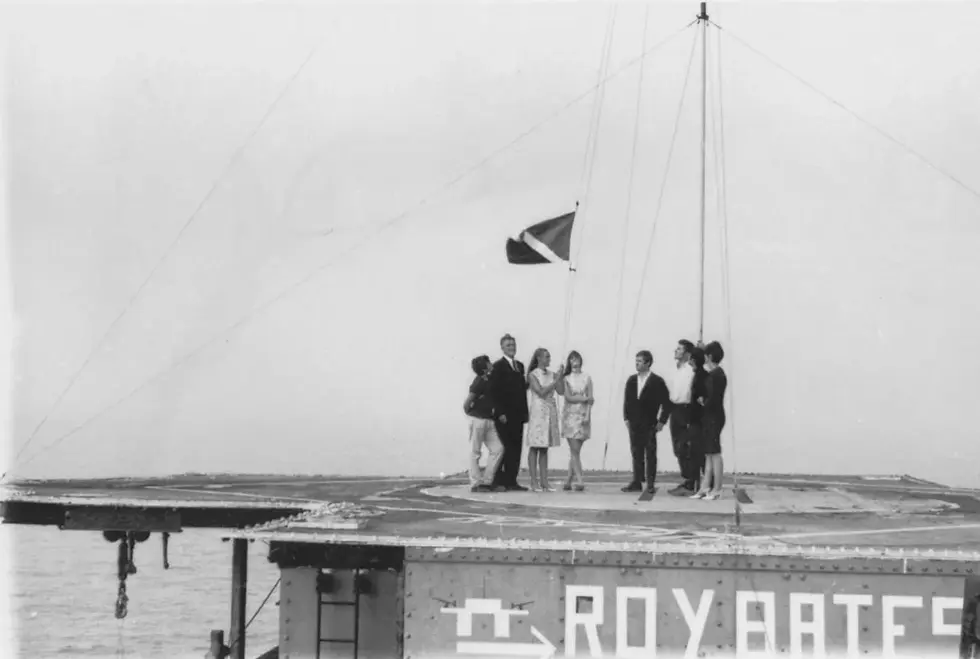
From this spirit our national motto was born: ‘E Mare Libertas’ (From the Sea, Freedom). Upon the declaration of independence, the founding Bates family raised the Sealand flag, pledging freedom and justice to all who lived under it.
Following this, Sealand created everything you would expect from an independent country: a functioning government, passports, permanent population, constitution, currency, stamps and the means to defend our sovereignty.
The world's smallest country, founded in 1967 in the North Sea.

In 1942, at the height of the Second World War, Britain built a string of fortresses out in the North Sea. Their guns were meant to shoot down German aircraft and the mines they laid in the shipping lanes. One of them, Roughs Tower, was floated out on a barge and sunk onto a sandbar: two hollow concrete towers carrying a steel deck, manned by gun crews who watched the grey water for the enemy. .
Often mistaken today for an oil rig, the structure was nothing of the kind. It was a sea fort, and when the war ended its purpose ended with it. The Navy stripped the guns of their firing parts, took off the men, and left it to the wind and the gulls. The great anti-aircraft barrels stayed where they stood, pointing out at an enemy that never came again. For two decades the fort stood empty in the North Sea, a forgotten relic of a war the world was trying to move past.
It would not stay forgotten. The fortress that Britain abandoned was about to become the unlikeliest nation on earth.
The Principality of Sealand is a sovereign state on a wartime sea fort in the North Sea, and the smallest country on earth. Its founder, Prince Roy Bates, declared it independent on 2 September 1967, and it has governed itself every day since, with its own flag, constitution, currency, passports and royal lineage. Nearly sixty years on, it is followed by more than 1.5 million people worldwide, with E-Citizens registered in 138 countries.